PCI Scan Failed? What to Fix Before Your Next ASV Scan
Failing a PCI scan is more common than most organizations expect. A failed ASV scan typically occurs when external systems expose vulnerabilities that violate PCI DSS security requirements. These issues can often be corrected quickly, allowing the organization to remediate the problem and rerun the scan to obtain a passing Attestation of Scan Compliance.
Understanding why scans fail and how to address those issues can significantly reduce delays in meeting PCI compliance deadlines.
Why PCI ASV Scans Fail
External vulnerability scans evaluate internet-facing systems for security weaknesses that could expose payment card data. When vulnerabilities are detected that exceed PCI DSS risk thresholds, the scan will result in a failure.
Some of the most common causes include:
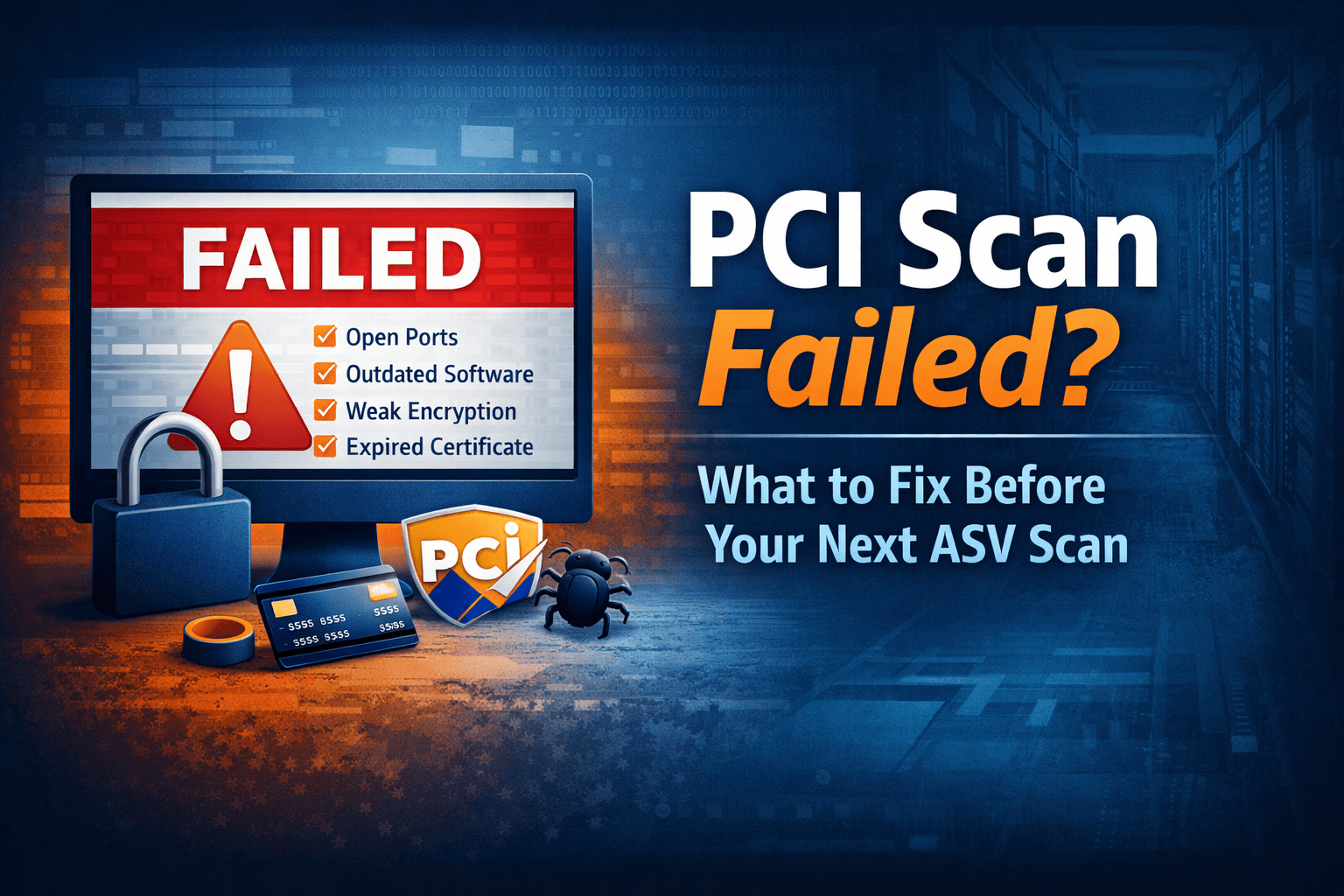
Open Ports and Exposed Services
Unnecessary open ports can expose services that attackers may exploit. Systems that allow remote access services such as FTP, Telnet, or unsecured administrative interfaces often trigger scan failures.
Organizations should ensure that only required services are exposed to the internet and that unused ports are closed.
Outdated Software and Unpatched Systems
Running outdated software versions is one of the most frequent causes of PCI scan failures. Known vulnerabilities in web servers, operating systems, and applications are continuously scanned for by automated tools.
Applying security patches and maintaining current software versions helps eliminate these vulnerabilities before the scan occurs.
Weak Encryption and TLS Configuration Issues
PCI DSS requires strong encryption for systems handling payment data. Weak cipher suites, outdated SSL or TLS versions, or improper certificate configurations can all result in failed scans.
Ensuring that servers use modern TLS configurations and secure cipher suites is essential for passing external vulnerability scans.
Expired or Misconfigured Certificates
SSL certificate problems are another frequent issue. Expired certificates or improperly configured certificates can trigger scan alerts and cause a failure.
Regular certificate monitoring and renewal processes can prevent these issues.
Remote Administrative Access Exposure
Remote management services that are accessible from the public internet are considered high risk. If administrative interfaces are exposed without proper restrictions or protections, they may cause a failed scan result.
Organizations should restrict administrative access through secure VPNs or IP allowlists whenever possible.
How to Fix a Failed PCI Scan
When a vulnerability is identified, the next step is remediation. This process typically involves updating software, adjusting firewall rules, correcting configuration issues, or disabling unnecessary services.
After the vulnerabilities have been addressed, organizations can request a rescan to verify that the issues have been resolved.
Many organizations complete remediation within a few days depending on the number and severity of the vulnerabilities identified.
What Happens After Remediation
Once vulnerabilities are resolved, the system can be rescanned to confirm compliance. If the scan results show that all PCI DSS requirements have been satisfied, the Approved Scanning Vendor issues a passing Attestation of Scan Compliance.
Organizations are required to complete these scans quarterly in order to maintain PCI compliance.
If a vulnerability appears to be incorrectly identified, it may be possible to submit documentation for review as part of the false positive review process.
Preparing for Your Next PCI Scan
The best way to avoid scan failures is to prepare systems in advance. Organizations should regularly review exposed services, apply software patches, verify encryption configurations, and monitor certificate status before running their quarterly scan.
Regular security maintenance significantly increases the likelihood of passing an ASV scan on the first attempt.
PCI ASV Scanning and Compliance
Organizations that process payment card data must complete quarterly external vulnerability scans conducted by an Approved Scanning Vendor. These scans help identify vulnerabilities before attackers can exploit them and ensure that systems meet PCI DSS security standards.
Clone Systems provides PCI ASV scanning, detailed vulnerability reporting, remediation guidance, and rapid rescanning to help organizations achieve and maintain PCI compliance.