Bridging the SOC 2 Gap: Why Auditors Need Independent Technical Testing to Verify Your Security
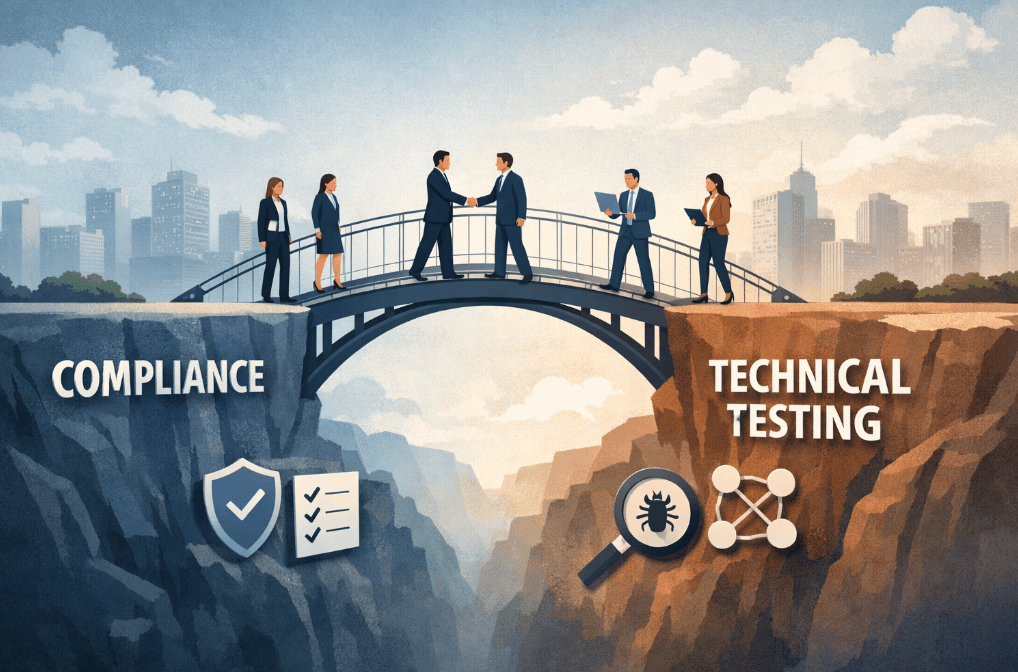
As service organisations race to deliver software and collect data, many view a System and Organization Controls (SOC 2) report as the gold standard for demonstrating trust. The logic is simple: if a certified public accountant says your controls meet the American Institute of Certified Public Accountants (AICPA) Trust Services Criteria, then customers, regulators and partners should feel safe. There is only one problem. A SOC 2 auditor cannot verify the technical strength of your defences. The auditing process is designed to assess controls and documentation; it does not include vulnerability scanning, penetration testing or continuous log monitoring[1]. Independent technical testing is the missing piece, and neglecting it leaves an organisation exposed.
In this article we explore why SOC 2 audits alone are not enough to prove your systems are secure, why auditors increasingly request evidence of external penetration testing, vulnerability scanning and log monitoring, and how independent providers can help bridge the gap. We also highlight the opportunities this creates for managed service providers, compliance consultants and resellers who can bundle high‑quality testing into SOC 2 readiness programmes.
Why this matters now
The growth of cloud services and software‑as‑a‑service (SaaS) has made SOC 2 compliance table stakes for technology firms. Customers, especially in regulated industries, demand proof that vendors operate secure systems. This demand has fuelled an ecosystem of SOC 2 readiness tools and consultancies designed to help companies document policies and streamline evidence collection. The AICPA, which maintains the SOC 2 framework, recently reminded the industry that auditors must remain independent of the clients they assess[2]. Independence rules prevent auditors from providing “non‑attest services” such as penetration testing or vulnerability management, because doing so would mean auditing their own work[2]. As a result, SOC 2 audit firms rely on external specialists to perform technical testing[3].
At the same time, cyber attacks continue to surge and regulators expect more than box‑ticking. The AICPA trust services criteria for security require organisations to implement detection and monitoring procedures to identify changes to configurations and newly discovered vulnerabilities[4]. Points of focus explicitly call for vulnerability scans and ongoing evaluations such as penetration testing to ascertain whether controls are working effectively[5]. The result is a practical expectation: even though the SOC 2 standard does not prescribe specific tests, auditors increasingly insist on seeing evidence of technical security assessments[6].
The core problem: checklists versus real attacks
A SOC 2 report is an attestation, not a hack‑proof guarantee. Auditors are accountants by training; the AICPA requires that SOC 2 engagements be performed by licensed CPA firms and prohibits non‑CPA organisations from issuing a SOC 2 opinion[7]. During an audit the CPA evaluates whether management’s controls are suitably designed and, in a Type II engagement, whether those controls operated effectively over a period of time[8]. Auditors review policies, process documentation, access logs and change‑management records. They do not run actual attack simulations. Indeed, they must remain independent from non‑attest services like penetration testing or vulnerability management[2], because providing those services would violate independence rules.
This independence is vital for audit integrity but creates a gap. Vulnerabilities in web applications, cloud misconfigurations and weak network services are discovered through technical testing, not by reading policies. The Trust Services Criteria acknowledge this by encouraging ongoing and separate evaluations: CC4.1 states that organisations must perform evaluations to ensure components of internal control are present and functioning[9]. CC7.1 emphasises detection and monitoring procedures, including vulnerability scans[4]. Without independent testing, management may assert that controls exist while attackers quietly exploit unseen weaknesses.
Quick definitions: the technical tests auditors look for
Before diving further, it helps to clarify what auditors mean when they ask for “vulnerability scans” or “penetration tests.” These terms are often used interchangeably, but they serve different purposes.
- Vulnerability scanning is an automated activity that identifies weaknesses such as missing patches or misconfigurations across systems and networks[10]. Scans should run periodically and after significant changes to catch newly introduced vulnerabilities[5]. While not a formal SOC 2 requirement, vulnerability scans help achieve the CC7.1 objective and are increasingly expected by auditors[1].
- Penetration testing involves skilled testers using automated tools and manual techniques to exploit vulnerabilities and simulate real adversaries. It proves whether weaknesses are actually exploitable and provides context for risk[6]. CC4.1 notes that penetration testing is one of the “ongoing and separate evaluations” organisations can perform to demonstrate that controls operate effectively[9]. Auditors expect penetration tests at least annually and after major system changes[6].
- Log monitoring and validation refers to capturing and reviewing system, application and access logs to detect anomalies[11]. Continuous logging supplies evidence that controls are working; without logs a Type II report becomes difficult because auditors test control effectiveness over months, not at a single point in time[12]. NIST incident response guidance notes that logs are vital for incident detection and recovery[13], and SOC 2 auditors will flag missing logs or overdue access reviews as exceptions[14].
Collectively, these technical tests provide evidence that security controls are not just documented but effective in practice. They also demonstrate to clients that your organisation takes threats seriously.
Why SOC 2 auditors rely on independent specialists
Given the independence requirements, how do auditors evaluate technical security? They review the results produced by independent specialists. The AICPA allows auditors to rely on the work of specialists as long as the specialist has the necessary skills and independence[3]. In practice, this means that SOC 2 consultancies and managed service providers (MSPs) often subcontract penetration tests, vulnerability scans and log monitoring to qualified security firms. The audit firm then examines the evidence provided by these external testers and incorporates it into the SOC 2 report.
This arrangement benefits everyone. Auditors maintain independence and focus on their attestation role. Specialists deliver rigorous technical testing that meets industry standards. Organisations receive actionable findings that improve security, rather than simply a checkbox. However, it also means that if an organisation does not proactively commission independent testing, their SOC 2 report may lack the evidence auditors are looking for, leading to delays or qualified opinions[15].
What auditors expect to see
Although SOC 2 is outcomes‑based, auditors have developed clear expectations about technical evidence. Based on updated guidance and 2026 practices:
- Evidence of penetration testing – Auditors expect at least one penetration test within the audit period and after major changes[6]. Tests should cover all systems within the SOC 2 boundary (external networks, internal networks, web applications, APIs and cloud environments)[6]. Reports should map findings to relevant Trust Services Criteria (CC4.1, CC6.1, CC7.1–CC7.4) and include remediation and retesting evidence[6].
- Vulnerability scan history – Auditors want to see regular vulnerability scans with documented remediation actions. CC7.1’s points of focus explicitly mention conducting vulnerability scans on a periodic basis[5]. Many organisations run monthly or quarterly scans and perform ad‑hoc scans after deployments.
- Continuous log monitoring – Evidence that logs are collected, reviewed and retained across the audit period. Guidance from a leading compliance platform notes that logs and monitoring supply continuous evidence and are critical for Type II audits[12][11]. Auditors may ask for proof of quarterly access reviews, configuration change logs and incident detection procedures[14].
- Human‑driven testing – Automated scanners alone are not enough. Independent security advisories warn that auditors reject assessments that rely heavily on automated vulnerability scanners or AI pentesting platforms[16]. Manual testing uncovers business logic issues and chained exploits that automated tools miss[6].
Failing to provide this evidence can slow down the audit. Independent experts emphasise that while penetration testing is not explicitly required, auditors overwhelmingly expect it and view it as practical proof that security controls work[6]. Without such proof, the auditor may issue a qualified opinion or request additional testing, delaying your SOC 2 certification.
Questions to ask before engaging a provider
To avoid the gap between audit and security, organisations should start with their objectives. Before commissioning a SOC 2 readiness programme or selecting a penetration testing firm, consider the following questions:
- What requirement are we trying to satisfy? Is the goal to improve our security posture, obtain a SOC 2 report, satisfy a customer contract, or support a regulator’s expectations? Different objectives may require different types of testing.
- What output do we need at the end? Do you need a technical findings report, evidence for auditors, a broader control review or all of the above? Make sure the testing scope aligns with your audit period and covers the systems in your SOC 2 boundary[6].
- Is the testing firm independent and qualified? Confirm that your penetration testers have the experience to simulate real adversaries, understand the Trust Services Criteria and remain separate from your audit firm[2].
- How will results be integrated into our SOC 2 programme? Ask how vulnerability findings, penetration test reports and log monitoring evidence will be documented and provided to your auditors. A structured evidence package reduces friction during the audit.
The reseller opportunity
Thousands of consultancies help companies prepare for SOC 2 audits, but most do not perform technical testing themselves. They specialise in documentation, policy writing and control mapping. Given the independence requirements, this makes sense: audit firms cannot simultaneously sell readiness services and attest to the results[2]. As a result, SOC 2 consultants and managed service providers regularly outsource vulnerability scanning, external penetration testing and log‑monitoring validation.
This outsourcing creates a significant reseller opportunity. If you provide high‑quality penetration testing, continuous vulnerability scanning or log monitoring services, you can partner with SOC 2 consultancies to fill the gap. These partners need reliable technical evidence for their clients, and bundling your services can help them deliver a complete SOC 2 readiness package. Because auditors expect human‑driven testing and continuous monitoring[16], there is strong demand for services that go beyond automated scans. Offering reports that map findings directly to the Trust Services Criteria and include remediation guidance will make your service indispensable.
Final thought
SOC 2 compliance is important, but it is only part of the journey. A clean SOC 2 report may satisfy procurement checklists, but it does not guarantee that your systems are secure. Auditors cannot and should not act as hackers. Independent vulnerability scanning, penetration testing and continuous log monitoring provide the technical evidence that auditors need and the assurance your customers expect. By bridging the gap between audit readiness and real security assurance, you not only strengthen your own posture but also unlock new business opportunities. The safest path forward is to start with your requirements, engage qualified specialists, and integrate their findings into your SOC 2 programme. Your auditors, customers and security team will all thank you.
[1] [4] [5] [10] Vulnerability Assessment vs Penetration Testing for SOC 2
https://linfordco.com/blog/soc-2-vulnerability-assessment-vs-penetration-testing
[2] AICPA Emphasizes Auditor Independence in the SOC 2 Industry – Sensiba
https://sensiba.com/resources/insights/aicpa-emphasizes-auditor-independence-in-the-soc-2-industry
[3] [7] Who Can Perform a SOC Audit? CPA, non-CPA, SOC 1 & SOC 2
https://linfordco.com/blog/who-can-perform-soc-audit
[6] [9] [15] [16] SOC 2 Penetration Testing Requirements for 2026 – Netragard
https://netragard.com/blog/soc-2-penetration-testing-requirements
[8] Who can perform a SOC 2 Audit: Firms & Auditors – Scrut Automation
https://www.scrut.io/hub/soc-2/who-can-perform-soc-2-audit
[11] [12] [13] [14] SOC 2 Logging And Monitoring: Best Practices and Key Steps for 2026
https://www.konfirmity.com/blog/soc-2-logging-and-monitoring