The Agentic AI Frontier: How to Secure the Autonomous Workforce
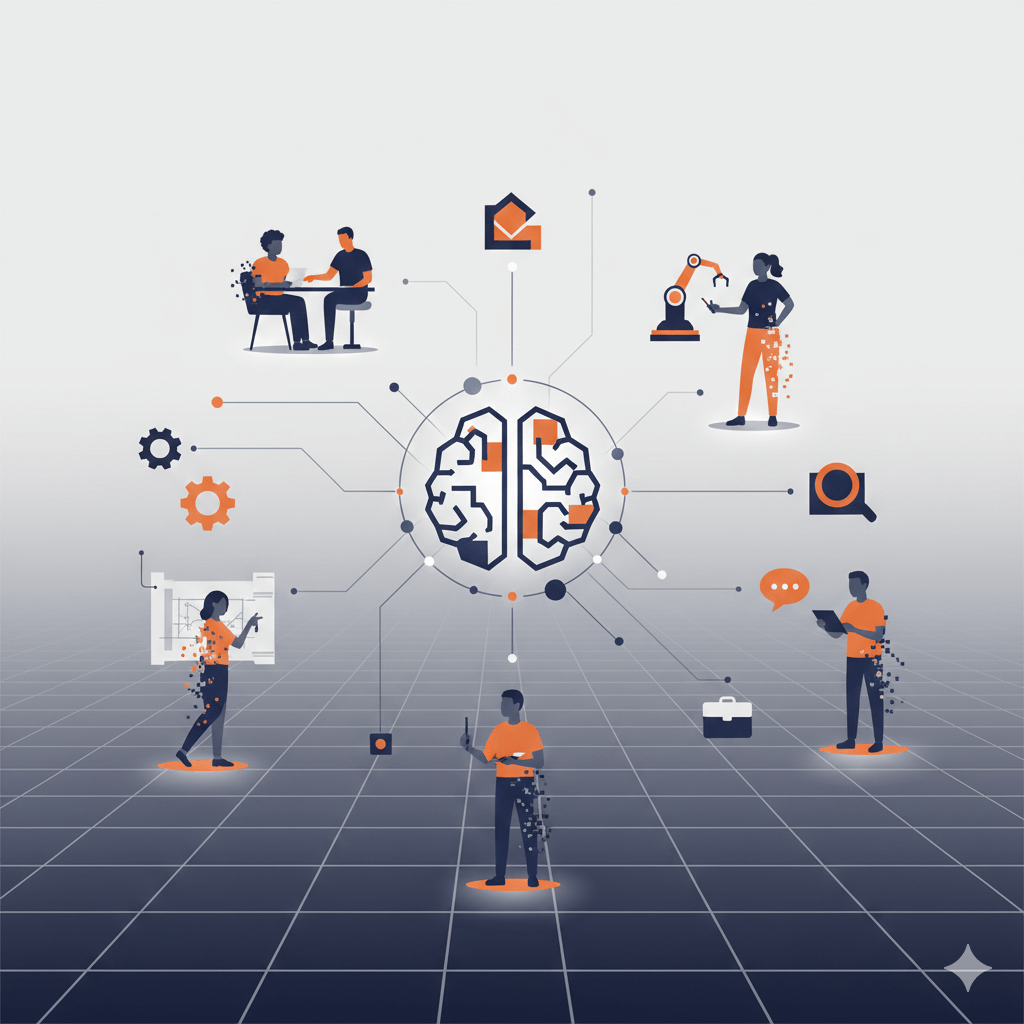
Agentic AI is rapidly reshaping how organizations operate. Unlike traditional AI systems that respond to direct human input, agentic AI systems are designed to pursue objectives independently. They can plan tasks, access systems, call APIs, retrieve external information, and make decisions with limited or no real time human oversight.
This evolution marks a meaningful shift in enterprise risk. When software systems are capable of acting autonomously across business and security critical environments, traditional security assumptions begin to break down. Recognizing this shift, Gartner has identified agentic AI as the top strategic technology trend for 2026, highlighting its potential to transform productivity while introducing new governance and security challenges.
For cybersecurity leaders, the question is no longer whether agentic AI will be used inside their organizations. The question is how to secure systems that behave less like tools and more like independent actors.
What Makes Agentic AI Different
Most enterprise automation today is rules based and deterministic. A workflow runs because a predefined trigger fires. The logic is static, predictable, and tightly scoped.
Agentic AI systems operate differently. They are goal driven rather than instruction driven. An agent may be given an objective such as investigate a security alert, reconcile financial discrepancies, or respond to customer issues. From there, it determines the steps required, selects which tools to use, evaluates intermediate outcomes, and adapts its approach.
These agents often operate across multiple systems. They may access ticketing platforms, internal knowledge bases, cloud environments, email systems, and external web resources. To be effective, they are frequently granted broad permissions and persistent credentials.
This combination of autonomy, access, and adaptability is what makes agentic AI powerful. It is also what makes it difficult to secure using conventional controls.
Why Traditional Security Models Struggle
Enterprise security architectures were built around two primary actors: humans and applications. Humans authenticate interactively and applications use narrowly scoped service accounts. Controls such as identity management, access reviews, logging, and segregation of duties are designed around this model.
Agentic AI does not fit cleanly into either category.
An agent is not a human user, but it makes decisions that resemble human judgment. It is not a traditional application, because its behavior can vary depending on context, data, and model behavior. As a result, several gaps emerge.
Identity is often ambiguous. Agents frequently run under shared service accounts or borrowed user credentials, making attribution difficult.
Permissions are often excessive. In practice, agents are granted broad access to avoid failure, which increases blast radius if something goes wrong.
Visibility is limited. Logs may record actions taken, but not the reasoning or objective behind those actions.
Accountability becomes unclear. When an agent makes a harmful or noncompliant decision, it is often difficult to determine responsibility or root cause.
These gaps matter because agentic systems can operate continuously and at scale. A single misconfigured or manipulated agent can cause widespread impact before human teams are aware.
Security Risks Introduced by Agentic AI
Agentic AI expands the attack surface in ways that are not always obvious.
One risk is unintended privilege escalation through goal optimization. An agent focused on efficiency or resolution speed may take actions that violate policy if guardrails are not explicit.
Another risk is indirect manipulation. Agents that browse the web or ingest external data can be influenced by malicious content. This includes prompt injection techniques, poisoned documentation, or compromised APIs that shape agent behavior without breaching perimeter defenses.
Credential exposure is also a concern. Agents rely on API keys, tokens, and secrets that may be long lived and highly privileged. If compromised, attackers gain access equivalent to the agent itself.
There is also compliance risk. Agents may act in ways that conflict with regulatory requirements, data handling rules, or internal policies if those constraints are not encoded and enforced.
These risks underscore a critical point. Agentic AI changes not just how work is done, but how risk propagates.
Rethinking Security for Autonomous Systems
Securing agentic AI requires moving beyond perimeter and tool centric thinking toward governance focused on autonomy.
Several foundational principles are emerging.
Treat AI Agents as First Class Identities
Each agent should have its own identity, separate from human users and shared service accounts. That identity should be tied to a specific purpose and configuration.
This enables proper authentication, access control, monitoring, and lifecycle management. It also supports clear attribution when actions are taken.
Enforce Purpose Bound Access
Access should be scoped to what an agent needs to accomplish its defined objective and nothing more. Least privilege must apply to agents just as it does to human users.
Purpose bound access limits damage from errors, misalignment, or compromise.
Prioritize Explainability and Decision Context
Security teams need more than action logs. They need insight into why an agent took a particular action.
This includes understanding the agent’s objective, inputs, intermediate decisions, and data sources. Without this context, incident response and compliance audits become significantly harder.
Introduce Oversight for High Risk Actions
Not all agent actions carry the same level of risk. High impact activities such as data deletion, external data sharing, system configuration changes, or financial transactions should trigger additional validation.
This may include human approval, policy checks, or secondary agent review.
Continuously Test Agent Behavior
Agentic systems should be tested in adversarial conditions just like applications and infrastructure. This includes probing for unsafe behaviors, policy violations, and susceptibility to manipulation.
Testing should be ongoing, not a one time exercise, as models and objectives evolve.
Organizational Governance Matters
Technology controls alone are insufficient. Agentic AI also requires changes in organizational process.
Clear policies should define who can deploy agents, what approvals are required, and how agents are reviewed and retired. Security, IT, and business teams must share ownership rather than operating in silos.
Employee education is equally important. Staff should understand that deploying an agent is closer to onboarding a digital worker than installing a tool. It carries responsibility and risk.
The Role of Cybersecurity Leaders
Cybersecurity teams are uniquely positioned to guide organizations through this transition. By framing agentic AI as an identity, governance, and risk management problem, security leaders can enable innovation while protecting the enterprise.
This includes advising on architecture, setting guardrails, integrating agent activity into monitoring and detection workflows, and ensuring compliance requirements are met.
Organizations that take this approach will be better positioned to benefit from agentic AI without losing control over critical systems and decisions.
Conclusion
Agentic AI represents a fundamental shift in how work is performed. Autonomous systems are beginning to act on behalf of organizations in ways that were previously reserved for humans.
This shift brings real productivity gains, but it also introduces new categories of risk that traditional security models are not designed to handle.
Securing the autonomous workforce requires treating AI agents as accountable actors with defined roles, constrained authority, and transparent behavior. Organizations that invest in this foundation now will be better prepared as agentic AI becomes a standard part of enterprise operations.
The frontier is not experimental anymore. It is operational. Security must evolve accordingly.