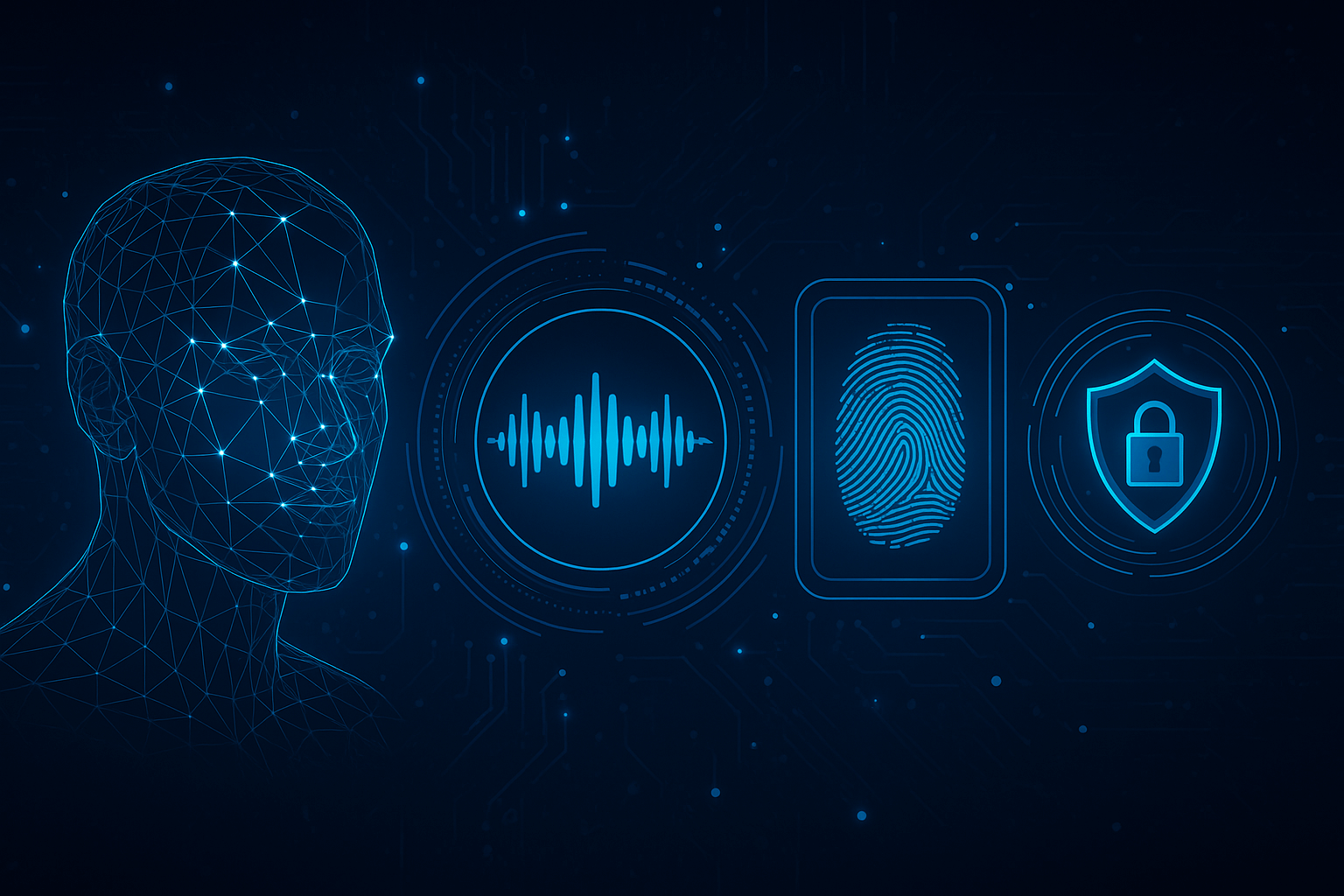
Deepfakes and Social Engineering in Financial Services
Identity Verification When AI Can Imitate Anyone
Financial institutions have always operated in a delicate balance of trust and verification. Customers expect seamless interactions, yet regulators demand strong controls. For years, that tension has been manageable because identity had observable anchors. A voice was a real voice. A face on a screen was a real face. A person who called to reset a password sounded like themselves because only they possessed their own vocal patterns. That world is gone. Deepfake technology has removed the natural friction that used to protect identity.
What began as an entertainment curiosity has quietly become one of the most disruptive forces in financial fraud. Attackers now have access to open tools that can recreate a customer’s voice with unsettling accuracy or generate a synthetic video feed that looks entirely legitimate under casual inspection. Fraud teams that once relied on human intuition are discovering that their instincts no longer carry the same weight. When an impersonation is generated by an AI model trained to match emotional tone, micro expressions, lighting behavior, and cadence, the usual signs of deception disappear.
The shift has happened faster than most institutions expected. Contact centers report a rising number of calls that feel slightly off, only for analysts to determine later that the caller was not a caller at all. Some banks have seen synthetic video attempts in their onboarding flows, including situations where the face on screen authenticated successfully but the interaction behavior did not match the expected profile. Even internal teams are experiencing impersonation attempts where attackers pretend to be executives, often during moments of urgency when social engineering pressures are highest.
The technical foundation behind this surge is worth understanding because it highlights why legacy verification breaks down. Modern speech synthesis models can reproduce a person’s voice from a sample short enough to fit inside a voicemail greeting. The output is smooth, consistent, and capable of expressing the same emotional range as the original speaker. If an attacker has basic biographical data from a previous breach, they can thread their way through knowledge-based authentication without raising suspicion. The system hears a familiar voice. The agent hears a tone that matches the expected profile. The attacker walks straight through.
Video deepfakes introduce an even more complex challenge. Real time facial reenactment tools can track the movements of an actor’s face and map them onto a targeted identity with a level of accuracy that defeats casual analysis. The lighting, eye movement, and blink patterns feel natural enough that even experienced reviewers struggle to spot irregularities. If the bank is relying on a simple liveness check or a quick selfie match, the deepfake can pass. Without advanced spoof detection or authenticated content signals, the entire verification step becomes vulnerable.
Some of the most concerning cases involve synthetic personas that integrate audio cloning, video generation, and AI driven dialogue. These personas do not simply play a prerecorded clip. They engage. They answer questions. They modulate tone. They adapt as the conversation changes. When this is paired with stolen internal knowledge, attackers can mimic the communication style of a senior employee well enough to push through fraudulent actions during real time conversations. In several investigations across the industry, the attackers conducted themselves with such confidence and fluidity that team members did not question their legitimacy until after the damage was done.
At its core, deepfake enabled fraud succeeds because it attacks a fundamental blind spot. For decades, identity verification in financial services has depended on the assumption that certain cues belong exclusively to the real person. Voice. Face. Tone. Emotional timing. The problem is no longer that attackers can imitate these cues. The problem is that they can replicate them so cleanly that the system cannot tell the difference. Fraud controls that were built for a world where these signals were unique now break when faced with their synthetic counterparts.
This is why the industry is shifting toward identity frameworks that rely on proof rather than perception. Multi factor authentication, cryptographic signing keys, and secure possession-based factors create barriers that synthetic media cannot bypass. A cloned voice may sound perfect, but it cannot generate a cryptographic challenge response. A deepfake video may look natural, but it cannot approve a transaction through a secure out of band channel. These controls do not rely on human judgment. They rely on mathematical certainty.
Behavioral biometrics are playing an increasingly important role as well. While a deepfake can copy the surface layer of identity, it cannot imitate the natural behavioral patterns that occur during real interaction. The way a person types, the timing of their responses during authentication, the subtle adjustments they make while navigating an app, the natural cadence of their speech when asked a question unexpectedly, the path their attention takes across a screen, the ease with which they shift between mental tasks. These signals form a behavioral fingerprint that is far more difficult to synthesize than a voice or face. Institutions using behavioral analytics can detect anomalies even when the synthetic media is visually and audibly flawless.
Detection technology is evolving alongside these controls. Instead of relying on human reviewers to spot irregularities, institutions are turning to tools that analyze media at a granular level. Unexpected spectral patterns in audio, frame inconsistencies in video, irregular gaze behavior, unnatural blink frequency, or micro distortions caused by real time rendering can all indicate synthetic manipulation. These signals are subtle, but they provide a counterweight to the growing realism of deepfakes.
A parallel effort is emerging around verified media provenance. Cryptographic watermarking and authenticated content chains allow financial institutions to confirm that an image, video, or voice stream originated from a trusted device or platform. This is still early in adoption, but it represents an essential direction. Unless institutions can distinguish authentic media from synthetic media at the source, verification will remain vulnerable.
The future of identity verification in financial services will be defined by layered validation rather than isolated checkpoints. Trust will come from possession, context, behavioral continuity, and cryptographic proof. A customer’s voice may still matter, but only if it appears alongside strong factors that synthetic media cannot replicate. Transaction approvals will depend less on who is speaking and more on whether the request is bound to a secure identity token. Internal communications will require more structured verification during high value actions, reducing the risk of executive impersonation.
For institutions that move early, this shift represents an opportunity to build a more resilient trust model than the industry has ever had. For institutions that wait, the gap between attacker capability and internal readiness will widen quickly. Deepfakes are not a passing trend. They are a structural change in the way identity can be manipulated.
Clone Systems continues to support financial organizations as they adapt to this reality. Our work in behavioral analytics, continuous monitoring, and identity assurance provides the foundation needed to verify users in an environment where appearance is no longer evidence. As synthetic media grows more sophisticated, our focus stays constant. Protect the integrity of each interaction. Reduce the surface area attackers can exploit. Strengthen identity at every stage of the digital journey.